Class II gaming is a unique and rather strange gaming classification. It exists only in the U.S. and deals only with Native American gaming. I’m not particularly a fan of Class II gaming, and I think it’s one of the most technologically and operationally messed up entities there ever was. What I see are problems in the classification itself—it’s not for the obvious reasons or for the things you might suspect.
Patrons are complaining that a jackpot is long “overdue,” but is it a problem with the game or a problem with perception? Here’s how to prove whether that progressive really should have hit by now.
At last year’s G2E, I was fortunate enough to represent the casino I work for on a panel discussing table games trends. A simple question sparking much debate made the session run over. At the conclusion of the discussion, I leaned into the microphone and repeated the gentleman’s question. The question was, “Can electronic table games work?” My response was, “Yes.”
Once we are familiar with the calculations for hit frequency, we can take these basic theories and apply them for more advanced study. Not only will this study allow you to examine the game’s play, but you will also be able to mathematically show whether the game is playing within statistical norms. This month we continue with a study of game play and an analysis of game statistics.
In an effort to reduce time wasted placing new cards into action, some casino managers have opted to use pre-shuffled decks of cards. This process has become so popular that many playing card manufacturers, if not all, offer this pre-shuffled service. The director of surveillance’s concern: Is this process safe? Are the decks shuffled randomly?
In the casino industry, with the economy being what it is today and exploding supply increases in many jurisdictions, it is important for operators to work tirelessly to create sustainable competitive advantages. Lenders, owners, boards of directors and investors, rightfully, are demanding these efforts from their operators. The key is sustainability.
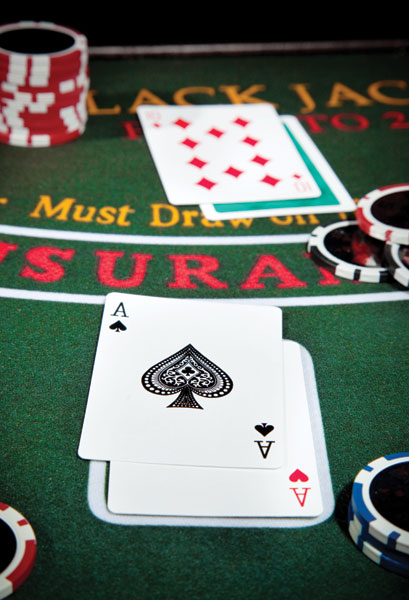
With Barona Resort & Casino’s new Blackjack Approximator, casino executives are able to accurately determine the threat of an advantage player and also calculate the expected value of a below average blackjack player as well. This article will highlight how the various components of the Blackjack Approximator work, why its outputs are important, and how it may be utilized to improve game protection and guest service.
Believe it or not, there is room to make more money from your live poker games. Over the last couple of years I have found different methods for extracting additional revenue out of poker. You can do it too. All you have to do is focus on the same metrics you would with standard casino table games. Remember, time is money, and your poker games are no exception.
A study of game mathematics can be valuable when considering which games to place on your floor, and it is necessary when determining the variance those games will have once your customers begin to play them. This month we’ll take a look at hit frequency and study the basics of this calculation. First we must define two terms.
Early in my career, someone told me that every gambler walking through the door of a casino expects to lose. My own father used to tell me, “Casinos weren’t built to lose money.” So why is it that 30 million Americans choose gambling as their “sport” of choice? Is it the challenge? Do they like being the underdog and beating the odds? Do they think, “Today is my day? Today will be different. Today I might be lucky?”